Safety Considerations
As amazing as bats are, we do need to be mindful of ensuring our safety when handling
them. Bats are often a reservoir species, which means they can harbor a pathogen and be a point of
exposure to humans or other species (typically mammals). This is why it is so important to never handle
a bat without proper equipment. They are also considered to be a rabies vector species in the state.
Human exposure requires the bat to be euthanized for testing, so that is why it is so imperative to
handle them wisely for the safety of yourself and the animal. Populations are decreasing, so every single
life we can try to save is crucial.
As with all animals, it is best practice to call a licensed rehabilitator before attempting to secure and/or transport a bat. They will advise you on the safest way to secure the animal, and you can ensure that you are transporting the animal to a facility licensed and equipped to handle their specific needs.
Check out our general emergency support page for information on how to get an animal to a rehabilitator in Pennsylvania.
Below you will find helpful reference material to guide you in assessing a situation with a bat. Remember, we are always happy to answer your questions!
What to do When you Find a Bat
Whenever you come across an injured animal, the best first course of action is contacting a wildlife
rehabilitation facility. We are able to guide you through questions to determine if the animal needs help,
and if so how to safely contain them. Any bat roosting with its wings not tucked to its body is typically in
need of help. Roosting on low, accessible, or visible places is also a cry for help or indication of injury.
When in doubt, call us! Should you find a bat indoors, never try to catch a bat in flight! This is very
difficult and may cause injuries- wait for them to roost safely somewhere.
You should NEVER handle a bat bare handed. Whenever possible, boxing over the animal is safest for
you and them. But, sometimes the bat may be wedged in an area this is not possible to do so. If you
need to try to capture a bat without a box, make sure to have a thick barrier. Always utilizing a thick
hand towel or leather gloves, you can get ahold of the bat as gently as possible and quickly transfer into
a secure box. They can escape out of very small holes, so ensure air-holes are no bigger then that of a
pencil.
Grounded Bats
Should you come across a grounded bat, they always need to be examined by a rehabilitation facility
that is licensed to care for bats. Follow the above listed safe handling procedures! A healthy bat will not
find itself stuck on the ground, and placing it on a tree for a higher point of takeoff is not setting the
animal up for success. Something caused them to be grounded, and a misconception is that healthy bats
cannot take off from the ground. One of our release criteria is ensuring that they have the strength and
capability to take flight from being grounded, so we see firsthand this is an easy maneuver for a
releasable bat.
Unwanted Bat Colonies in Houses
All of this being said, bats have begun to adapt to urbanization. Species like big brown bats have found
attics to be very sufficient roosting opportunities to establish colonies. While we would personally love
to have some small mammal roommates, not everyone appreciates tenants who don’t pay rent. When
situations like this come up, ensuring to find wildlife exclusion pest removal services is the most humane
course for these magnificent mammals. We recommend Bat Removal Specialists LLC as a first point of
contact. They are very informed and truly care for bats!
Bat Pups and Maternity Roosts
We will often get “frequent fliers” who bring us multiple pups from an established maternity colony. Our
colony crevice roosting species, like big brown bats, often may need a pup catch net placed at the
bottom of their colony. Pups still have a lot to learn- on hot days they may fall from a roost or
sometimes they accidentally fall. If you know you have a maternity colony at your house, seasonally
around late May putting up a mesh catch net will ensure the pups safety. This can save so many little
bats lives! Here is a link to bat world sanctuaries information regarding pup catch nets How to Create Nursery Colony Pup Catchers – Bat World Sanctuary
Some Important Cases we Have Seen
Thi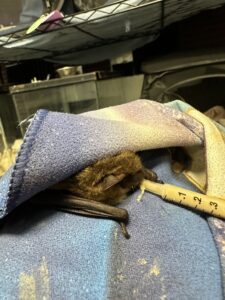 s adult big brown bat is photographed being fed a critical care diet early into treatment. He came to
us after being caught by a cat. Cat caught animals need a regiment of antibiotics to make sure an
aggressive bacterium called Pasturella doesn’t infect their bodies and kill them. He was a trooper from
the first day, being calm during topical and oral medication regiments and daily feeding. He healed beautifully, and had two additional months of the winter to be indoors with daily room service and care before we were able to safely set him up in our flight enclosure in the spring to prove his flight agility was still up to snuff. He was released into an established bat box on one of our staff members properties.
We often times get bats stuck in sticky tape meant for insects, mouse traps, or other deadly human-
made items. This poor bat came in with its leg stuck in a mouse trap and fractured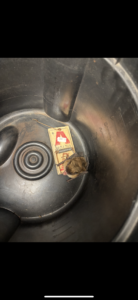 her leg at the femur.
The leg was necrotic and non-viable. Emaciated, dehydrated, and screaming in pain all we could do for this sweet girl was make sure she was no longer suffering. We performed a humane euthanasia shortly
after intake, a heartbreaking loss to our bat populations as female big brown bats typically only have one pup a year. She showed signs of likely having raised pups in summers past, so not only was she removed from our ecosystem but the potential for future offspring was removed too. It is not always a happy ending in rehab, but we are so glad the finders took the time to bring her.
This big brown bat pup came to us emaciated, dehydrated, and lethargic. Arriving all the 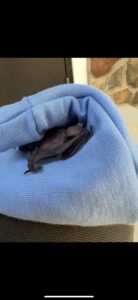 way from Camp
Hill, she had quite a long journey. She was about 3 days old when she arrived, and in need of immediate
care. We administered sub-cutaneous fluids and placed her in a quarantine incubator. She was very slow to show interest in eating. They need to be fed every two hours around the clock, so bat pups are a labor of love. After just over two months of care- formula feedings, weaning and getting to eat solid foods, and flight training in our newly built outdoor flight enclosure with foster siblings, she was able to fly free by late August! Joining an established colony with her foster unit, she was happy to be back in
the wild and is certainly helping hikers one mosquito meal at a time each summer.