Wildlife Rehabilitation
Wildlife reh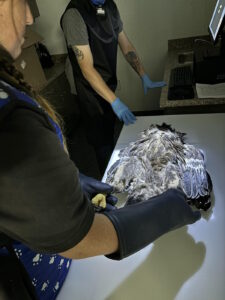 abilitation is the care and treatment of injured, sick, and/or orphaned wildlife with the goal of releasing them back into the wild or ending their suffering when necessary. This involves providing medical treatment when needed, feeding and housing wildlife throughout their recovery period, and raising orphan wildlife until they are capable of surviving on their own.
At times, animals are not able to be released back in to the wild. This can be a result of many factors, including but not limited to genetic issues, injuries that are not able to be fixed, improper care from a member of the public, and/or developmental deficits.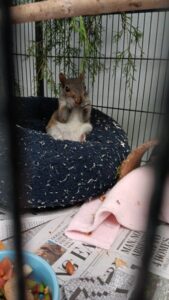
As rehabilitators, it is our responsibility to come up with the next best solution when an animal cannot be released. Red Creek, and many of the other rehabilitation facilities in Pennsylvania maintain the permits required to keep animals for use for education, display, and as foster parents to other wildlife. We consider whether or not an animal is in pain, whether they can function normally enough to feel comfortable, and whether or not they are able to adapt to captivity. Adapting to captivity can mean being comfortable in an enclosure, being comfortable in the presence of humans, and participating in our care of them without becoming overly stressed.
Animals that are able to adapt may be retained as a permanent resident or transferred to another facility to live out the remainder of their lives as a resident in another program. In the case of animals that are suffering physically, mentally, or both, we sometimes have to make a quality of life call and euthanize that animal to prevent further suffering. This is always a difficult decision as rehabilitators determine what is in the best interest of the animal.
Understanding the specific care needs of each species, as well as how to safely treat injuries and diseases 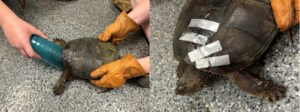 common in each of those species is a challenging, but important aspect of the work of a wildlife rehabilitator. In Pennsylvania, individuals are required to train under other licensed rehabilitators and pass a licensing examination for each category of species they wish to work with before they can begin rehabilitating on their own. There are also federal licensing requirements for the care of many species. These requirements are critical to ensuring that wildlife receives the best care possible.
Wildlife Education
Wildlife rehabilitation, education, and display are all licensed and governed separately. However, many wildlife rehabilitation facilities, including Red Creek, maintain the licensing required to house non-releasable wildlife and 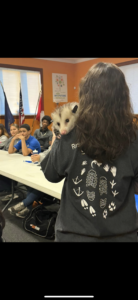 utilize them for educational programs.
This gives us the opportunity to demonstrate how amazing native Pennsylvania wildlife is, teach others how important wildlife is to our lives, and inspire many to protect our amazing natural resources by fostering connections with animals that many will never get to see anywhere else.
Our facility includes an education center and walking trail with permanent residents on display. This allows us to provide education programs on-site, off-site, and virtually. Open hours for our education center can be found here and event information can be found here.
Program information can be found here.
Rehabilitation Education
Red Creek prioritizes education for future rehabilitators, as well as members of the public. Red Creek offers classes on-line and occasionally in person that cover the basics of wildlife care and rehabilitation. This provides a framework for anyone interested in becoming a rehabilitator or permitted capture and transport volunteer.
Public Health and Safety
Wildlife rehabilitation is closely tied to public health and safety.
Handling wildlife comes with many inherent risks. There is the risk of injury when an animal that is sick, stressed, or injured and in pain lashes out. Orphaned wild animals raised by humans are at risk of becoming habituated, losing their instinctive desire to flee humans. When this happens, the animal may respond to a stressful situation with a person or a pet by lashing out, rather than choosing to run away. Wild animals can be carriers of a variety of diseases. Many of these diseases are zoonotic, meaning they can pass to humans. Others may pass to livestock or pets.
By providing a place where these animals can be cared for by experienced professionals with defined protocols for safety and releasability, wildlife rehabilitation keeps these risks contained. People are less likely to put themselves at risk by attempting to handle and care for these animals themselves.
Wildlife rehabilitators are also in a unique position to track the frequency and spread of diseases and other public health concerns. We work closely with other public health organizations to identify and manage disease outbreaks, such as reporting areas that we notice a high frequency of lead-poisoned patients coming from or identifying the most common species that present with highly pathogenic avian influenza. This means that public health risks get identified and controlled faster, keeping people and animals safe.
Our Mission, Our Philosophy
Our Mission
To offer a second chance to distressed Pennsylvania wildlife through rescue and rehabilitation, public education and by providing training for wildlife rehabilitators.
Our Philosophy
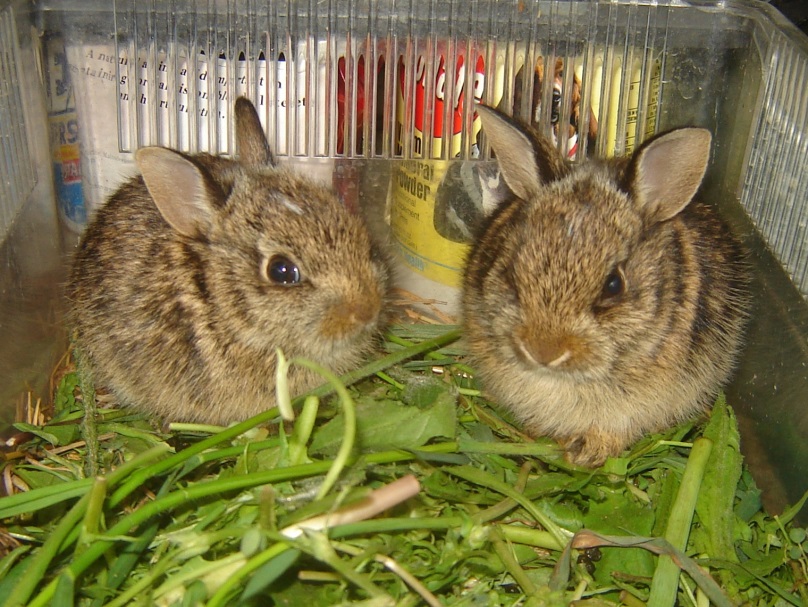
We believe that every life, no matter how small or common, is precious and deserves a chance at life.
Taking in several thousand wild animals annually, from the tiniest hummingbird, to the largest eagle, from chipmunks to deer, Red Creek has been giving wildlife a second chance for over 20 years.
We believe that education is an important part of saving our wildlife, the environment and the planet for future generations.
Each year, tens of thousands of students enjoy a positive wildlife experience through Red Creek’s LIVE RAPTOR programs and assemblies.
We believe wildlife rehabilitation is a valuable service that should be available to everyone.
Red Creek is helping others become wildlife rehabilitators through classes, seminars and online training, expanding this serve to new areas in Pennsylvania and nationally.
Corporate Information
Red Creek Wildlife Center, Inc.
is a Pennsylvania Non-Profit Organization
Your Contributions are Tax Deductible
Corporate information, including IRS financial filings, is publicly available at Guidstar.org