Below are listed several common wildlife emergency situations that we encounter regularly. Any wild animal that is in need of assistance should be brought to a licensed wildlife rehabilitator. Many online solutions can do more harm than good for wildlife, especially homemade diets. We see many birds each year that come to us with wings and legs that are no longer able to heal or function properly because they were set incorrectly, causing them to become extremely infected or to heal in the wrong position. Well-meaning, but incorrect care can be harmful.
You can find local wildlife rehabilitators quickly by using online search engines: Just type your state and the term “wildlife rehabilitation” in the search box. Calls to your state wildlife agencies, local veterinarians, animal shelters, and even 911 will often have successful results.
While searching for professional help, keep the bird warm in a dark and quiet location. Don’t give it any food or water. Warmth, dark and quiet are all the temporary help they need.
Check out our general emergency support page for information on how to get an animal to a rehabilitator in Pennsylvania.
The information provided below will help to determine if a songbird is in need of assistance. Although these guidelines are helpful, it is important to always contact a rehabilitator prior to bringing an animal in for care.
Baby Birds
Baby songbirds that are found on the ground may have been knocked out of the nest during a wind-storm, removed and dropped by a predator, or may have jumped from the nest themselves a little earlier than is usual for a bird getting ready to fledge.
Fledgling Birds
Most songbirds leave the nest before learning to fly. They are usually fully-feathered but may appear to have a shorter tail. Siblings may wander about, scattering in different directions while the parents continue to find, follow and care for them. This stage can last for several hours to a day or so, and in the case of Great Horned Owls, weeks. Once the fledglings learn to fly, the parents gather them together and begin teaching them the survival skills they will need to know such as finding food.
People often find fledgling birds temporarily stranded in a yard or on a porch and think they need help. However, this is a very important transition time for these birds and should not be interrupted. Birds brought into rehab during this time have a poor chance of survival. They are old enough to know that people are not their parents and resist being hand fed, yet they haven’t learned to feed themselves.
The type of stress that occurs in these little ones when they are forced into unnecessary human contact can lead to intense muscle damage, particularly heart damage, and even death due to a condition called capture myopathy. If you find a songbird outside, call a licensed rehabilitator to determine if it is truly in need of assistance!
If uninjured, stranded fledglings can be moved to a safer location nearby. Moving it to a nearby tree limb or herding it to a safer area may be all the “rescuing” it needs.
Sticky Tape
Non-target animals are often trapped in sticky tape used to control lantern fly populations and other “pest” species. These animals most often die on the tape after suffering severe injuries and while highly stressed.
If a bird or other animal is stuck on glue or tape, it is important that you do NOT attempt to remove them. These attempts may cause even more stress to the animal, and without proper restraint technique provided by a trained individual, partially freed animals can injure themselves further by continuing to attempt escape.
Cover the remaining tape with tissues or paper towels to avoid the animal getting stuck further, and transport the animal to the closest wildlife rehabilitator right away. As a reminder, it is always best to call ahead to ensure the rehabilitator accepts the species you are bringing them, and is prepared for your arrival.
Avian Conjunctivitis
Songbirds with eye infections are occasionally found at bird feeders this time of year. A bird might be observed sitting at a feeder for long 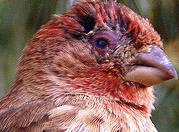 periods of time and depending on how advanced the infection is, the bird may fly away when approached or sit there blindly — allowing you to pick it up. There is treatment for this condition and there is a lot you can do to help.
Avian conjunctivitis is an eye infection that can inflict many species of songbird but is most often seen in house finches. The bacteria affect the conjunctiva, the membrane surrounding the eyes, causing the tissue to swell and become irritated. As the infection spreads, the bird can become completely blind. Starvation quickly follows if not treated.
Avian conjunctivitis is easily spread at bird feeders. Birds can contaminate the seed simply by visiting the feeder and once a sick bird finds a feeder, it may be reluctant to leave that food source because it cannot see. Healthy birds will quickly pick up the infection and spread it to other feeders as they visit the neighborhood.
Signs of a problem are swollen, red eyes, listlessness and approachability. Birds will often sit fluffed up as their energy reserves diminish. If you see such a bird, capture it immediately and place it in a box to keep it warm, dark and quiet. Call a rehabilitator immediately, and be prepared to transport as soon as possible.
Even if you do not see infected birds in your area, you can help reduce the spread of the disease by following a regular disinfection routine of your bird feeders:
” Twice each week allow the seed to empty in the feeder.
” Clean any debris and bird droppings from the feeder.
” After cleaning, soak the feeder in one part bleach to thirty parts water solution for fifteen minutes.
” Rinse and allow to completely dry before refilling the feeder with fresh seed.
It is very important to apply this routine to ALL the feeders in the area. Encourage your bird-friendly neighbors to do the same by printing and sharing this article with them.